*Originally posted on apanueloworld.com regarding a trip in 2017.

Switzerland is a beautiful, beautiful country in its own right. But it’s also the country of my heritage, both genetically and religiously. So when when my siblings and I decided to include it as a destination on our Europe trip last summer, we knew that it would include more than chocolate shops and hiking stops.

However, in the planning process we discovered that there is a reason why people go on the official ‘Anabaptist history tours.’ It’s because the information is hard to find. Even now that I’ve been and know the places to search for, it’s a lot of information to comb through.
My primary sources for this experience were word of mouth, including a family from my church, friends of friends who have been, and our local hosts in Switzerland.
Below is the list of places that we visited on our trip, just to get you started. You will notice that most of them start with the word ‘Taufer,’ which means, Anabaptist.
Tauferhoehle
On our original list was the Anabaptist cave, or Tauferhoehle, near Zürich. This is a cave where Anabaptists hid out. Directions to this place can be found on google maps and it is best accessed by car. Google maps will take you as far as a split in the road. Follow the road sign marker to Tauferhoehle. It will lead you to a little clearing by a wood pile with more signage. This is where you park and the hiking begins, first through a meadow, then the woods. For whatever reason, I didn’t take any pictures looking up, only looking back.


Of note, there is a desperate looking port-a-pot here for those who are looking desperately.
From here you follow a trail through the woods to the cave.
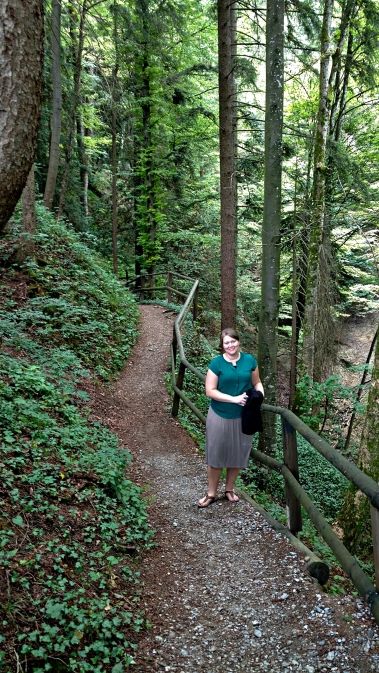


Since it was Sunday morning and we were in the cave where our religious ancestors hid to escape persecution and death, we joined in the traditions before us and had our own little hymn sing.
Taufergedenkplatte: Anabaptist Commemorative Plate.
This is a plaque along the Limmat River in Zürich that was erected in 2004 to commemorate the deaths of Felix Manz and Hans Landis, the first and last Anabaptist martyrs in Zürich. Manz was executed by drowning in these very waters. Directions to this are also on google maps and can be found if you follow the link above.


Tauferversteck: Anabaptist hideout.
This is a farm where the Anabaptist, Christian Fankhauser, hid from authorities (and imprisonment) in a hidden room between his connected house and barn. While that alone is interesting, of additional interest is that this home has stayed in the same family since that time (12 generations!). It was recently turned into a museum by a woman who married into this family and became a modern-day Anabaptist after researching the history of her new home!
When we were there we got a little tour from friends of friends, who happened to be there at the same time! Since we were with them, we didn’t take the official tour. If you are going on your own you need to take the tour and register ahead of time. The website is in German (look for the translate option on the right of your search bar) but she does speak English and can be contacted via email to arrange a visit. Do not just show up. This is a family home and we want to be respectful of that. Directions to Tauferversteck can be found on their website.


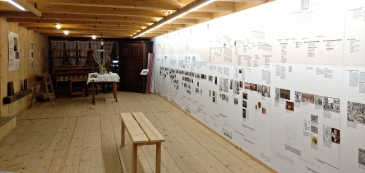
Anabaptist Signs in Trub
2007 was recognized by Switzerland as the year of the Swiss Anabaptist, in acknowledgment and reconciliation between the Anabaptist and Protestant church. It was then that the town of Trub erected several plaques throughout town, detailing the history of the Anabaptist movement. Having our own experiences with Anabaptist history education and having visited the Tauferversteck museum, we found the signage to be elementary. However, we did enjoy the lunch we packed on the local church porch and found a very amusing tandem swing to enjoy at the park.


We also took a picture with the town sign because our grandmother was a SwarzenTRUBer. It was a full circle moment.

Also, bonus info: near Trub there is a chocolate store called Kambly Erlebnis, with FREE samples! They specialize in chocolate on cookies and pretzels and such. It makes for a very fun, sweet intermission to your travels and a good source for Swiss chocolate souvenirs!

I know this post is getting long, but we are finally at our final destination:
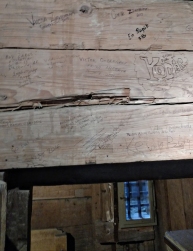
This is a castle of great historical relevance that I somehow knew nothing about before we went. In fact, we only learned of it from our friend of friend connection, the day of going. This is the castle where many early Anabaptists were imprisoned and the prison, complete with bars and shackles, still stands. It is now the destination of many tour groups and visitors sign their names to the doors that once locked their ancestors from the world. Word to the wise, don’t forget your pen in the car (like we did). There are a lot of steps between the parking lot and the jail tower!



The final thing worth mentioning is the book, Mennonite Tourguide to Western Europe, by Jon Gleysteen. This book was recommended to me and although it is noted to be a little outdated, it is considered the current source for country by country self-guided tours through Europe’s Anabaptist history sites.

 Trips by Camille
One thought on “DIY: Anabaptist History In Switzerland”